
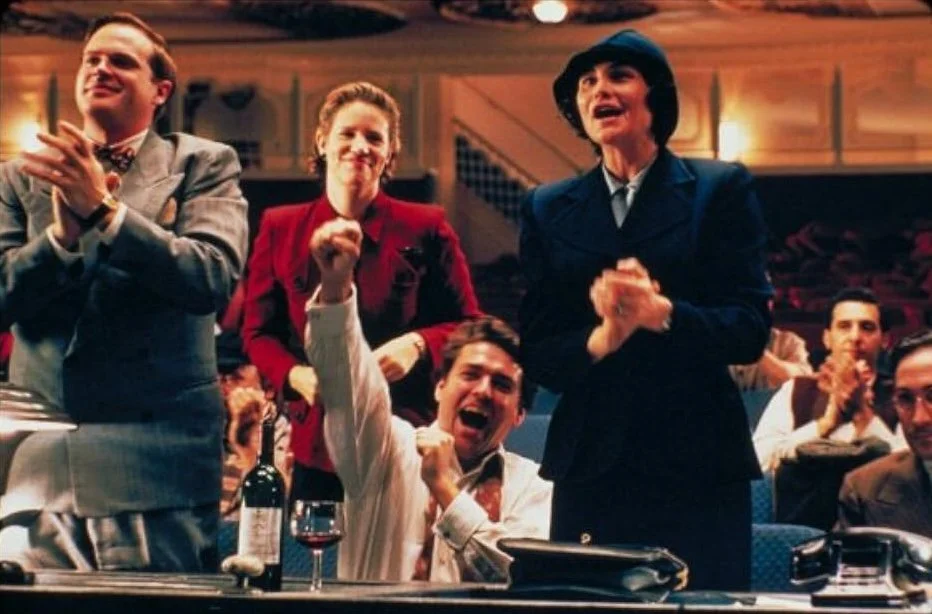
CRADLE WILL ROCK (1999)
Cary Elwes as John Houseman, Adele Robbins as Augusta Weissberger, Angus MacFadyen as Orson Welles, Cherry Jones as Hallie Flanagan. Photo: Touchstone Pictures
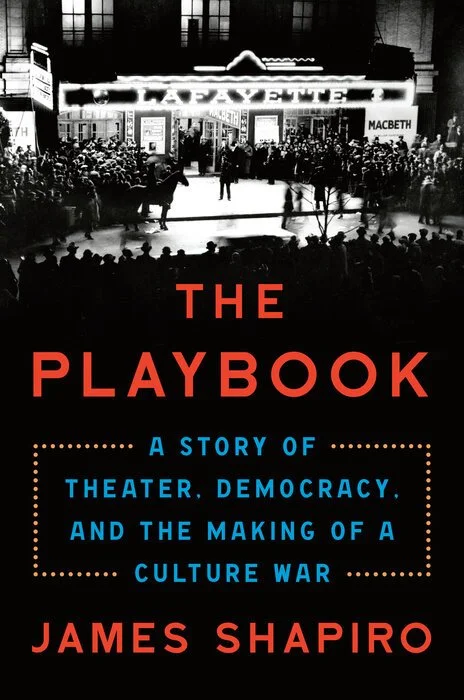
Ep. 97 is also available on Apple Podcast | YouTube | iHeartIn the 9th podcast in the Revolution to Rights: America at 250 series (Episode 97), The Boston Sisters (Michon and Taquiena) talk with James Shapiro author of The Playbook: A Story of Theater, Democracy, and the Making of a Culture War, a history of the Federal Theatre Project, its ground-breaking productions, and the people behind its creation and rise; and how the “un-American” label was largely a political maneuver that led to the Federal Theatre Project’s demise.
CRADLE WILL ROCK, the 1999 film written and directed by Tim Robbins kicks off the conversation about the Federal Theatre Project. This ensemble drama set in 1930s New York, at the height of the Great Depression, weaves together artists, politicians, and wealthy patrons around one explosive moment: the government’s attempt to shut down Marc Blitzstein’s pro-labor musical staged by the Federal Theatre Project, just before opening night.
At the same time The Federal Theatre Project is in a battle for its survival, with Hallie Flanagan defending the WPA program against political attacks from ambitious members of Congress hostile to President Franklin D. Roosevelt’s New Deal.
“I think the best thing for our political system would be for people to understand the roots of the argument for being ‘un-American.’ [Congressman] Martin Dies defeated the Federal Theatre Project by claiming it was communist, and it was not.”

REVOLUTION TO RIGHTS: AMERICA AT 250
Episode 97 is part of REVOLUTION TO RIGHTS: AMERICA AT 250, a 10-episode podcast series from Historical Drama with The Boston Sisters® that takes you on a journey through America’s 250-year history of advancing freedom and justice since the Declaration of Independence in 1776.
Production for this Revolution to Rights: America at 250 podcast is supported by a donation from Grupo Obie, a small friendly group of Oberlin College alumni. All things are possible through the generosity and kindness of friends. Thank you!
GUEST

James Shapiro
James Shapiro is the Larry Miller Professor Emeritus of English and Comparative Literature at Columbia University. In addition to The Playbook: A Story of Theater, Democracy, and the Making of a Culture War (2024), James Shapiro is also author of Rival Playwrights: Marlowe, Jonson, Shakespeare (1991); Shakespeare and the Jews (1995), which was awarded the Bainton Prize; Oberammergau: The Troubling Story of the World's Most Famous Passion Play (2000); 1599: A Year in the Life of William Shakespeare (2005), winner of the BBC Samuel Johnson Prize; Contested Will: Who Wrote Shakespeare? (2010), winner of the Lionel Trilling Award in 2011; 1606: The Year of Lear, which won the James Tait Black Prize; Shakespeare in a Divided America (2020), a New York Times 'top ten books of 2020'; and the forthcoming Othello: An American Tragedy (February 2, 2027).
He has co-edited the Columbia Anthology of British Poetry, served as the associate editor of the Columbia History of British Poetry, and edited a volume on Shakespeare in America for the Library of America. He has also co-authored and presented a 3-hour BBC documentary, The King and the Playwright (2012). He has been awarded fellowships by the Guggenheim Foundation, the NEH, the Cullman Center for Scholars and Writers, the Huntington Library, the American Academy in Berlin, and the American Academy in Rome. In 2011 he was inducted into the American Academy of Arts and Sciences. (source: Columbia Univesrity)
Connect with James Shapiro: Website
TAKE A DEEPER DIVE INTO THIS PODCAST!
Purchase James Shapiro’s The Playbook: A Story of Theater, Democracy, and the Making of a Culture War from our affiliate bookstore. You’ll find that and other related titles about the historic quest for freedom for all people in the U.S. on the REVOLUTION TO RIGHTS bookshelf.
Purchase other titles from past podcasts on the MBGLtd affiliate page on bookshop.org. Your book purchases support independent booksellers and a small commission supports Historical Drama with The Boston Sisters®.
CRADLE WILL ROCK
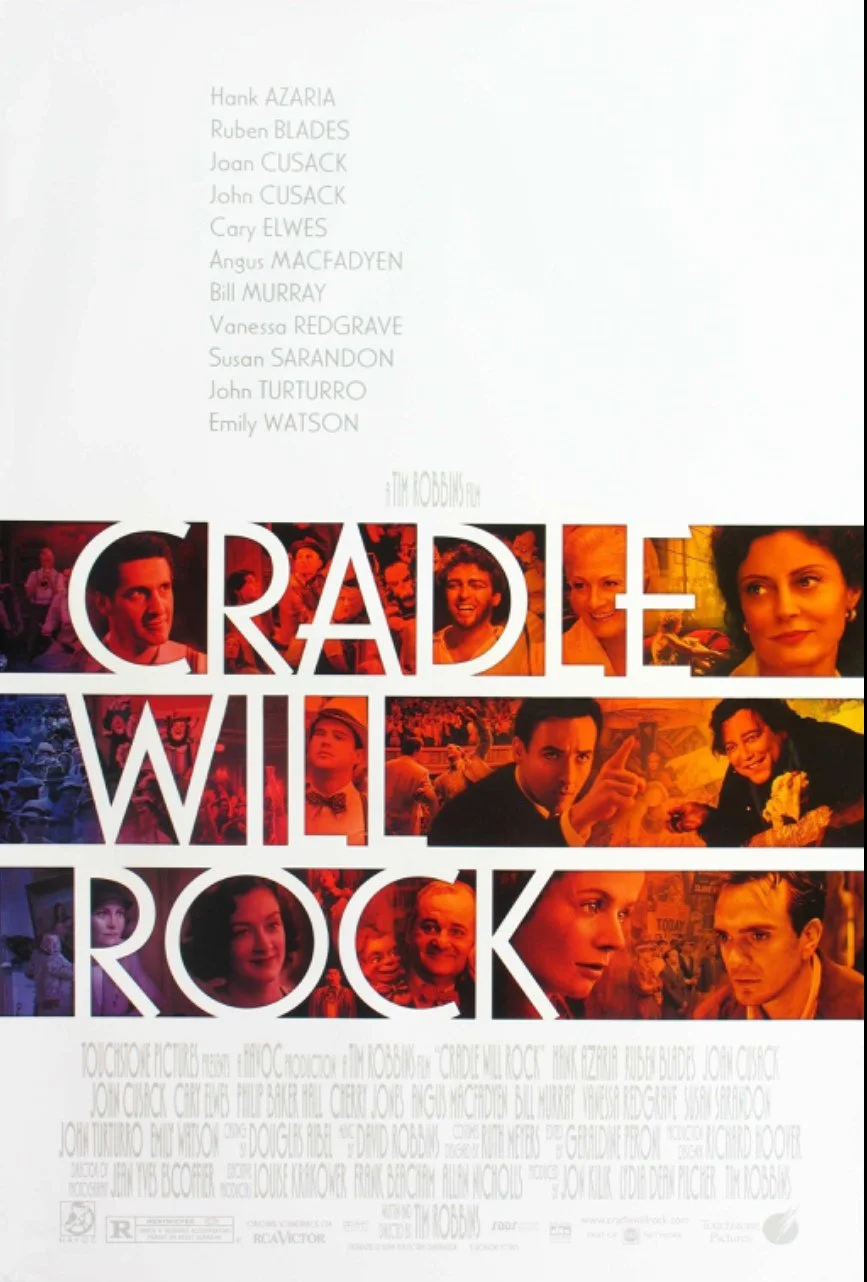
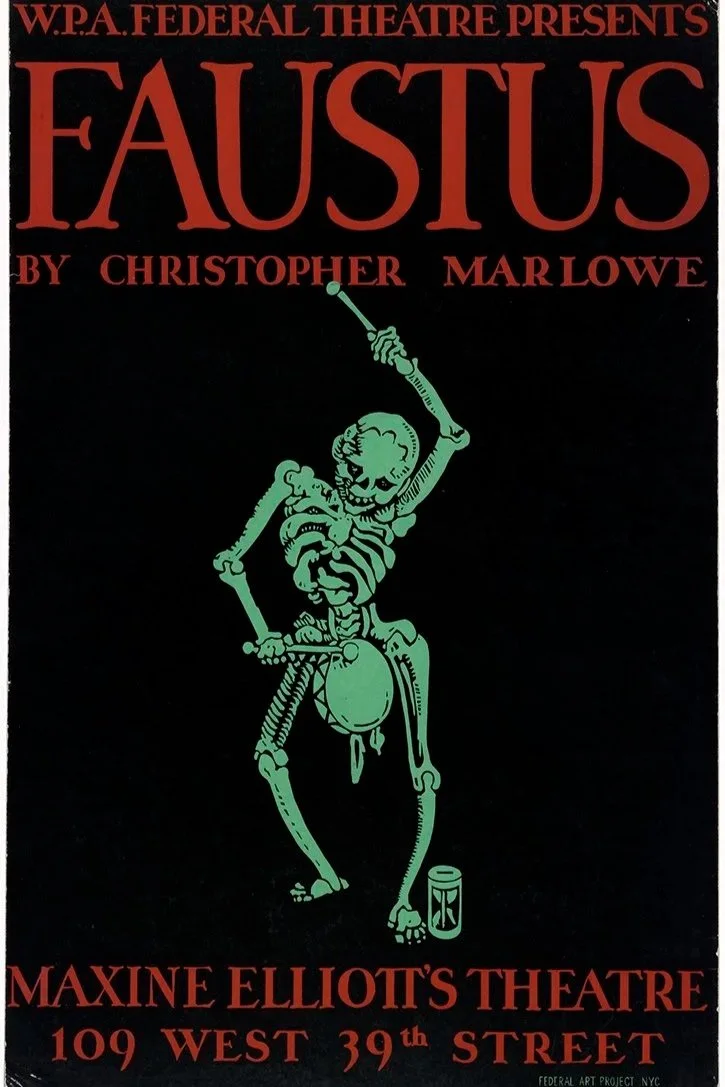
We chose CRADLE WILL ROCK for our Revolution to Rights: America at 250 miniseries because the story presents a history about the arts in America, and the power of the arts in building a strong democracy. The Federal Theatre Project, which ran from 1935 to 1939, was part of the Works Progress Administration (WPA) agency, a New Deal initiative from President Franklin D. Rooselvelt’s administration. The Federal Theatre Project staged more than a thousand productions across twenty-nine states. And with low-cost or free tickets, it put theater in front of a huge slice of the American public.
“At the beginning of Cradle Will Rock a title appears: ‘A [mostly] true story’ This is a film, and in the interest of storytelling I bent some facts and manipulated some dates. The Rivera-Rockefeller controversy actually happened in 1932, the invasion of Ethiopia in 1935, the downfall of the Federal Theatre in 1939. I invented the characters of Mathers (Philip Baker Hall), Countess La Grange (Vanessa Redgrave), Carlo (Paul Giamatti), Aldo Silvano (John Tuturro), and Tommy Crickshaw (Bill Murray) and his nemeses, Sid (Jack Black) and Larry (Kyle Gass). The rest of the characters in this film are based on real people and are as historically accurate as possible.”
Source: Cradle Will Rock: The Movie and the Moment by Tim Robbins (2000, Newmarket Press)
Real-Life History/Cast in Tim Robbins’ Cradle Will Rock
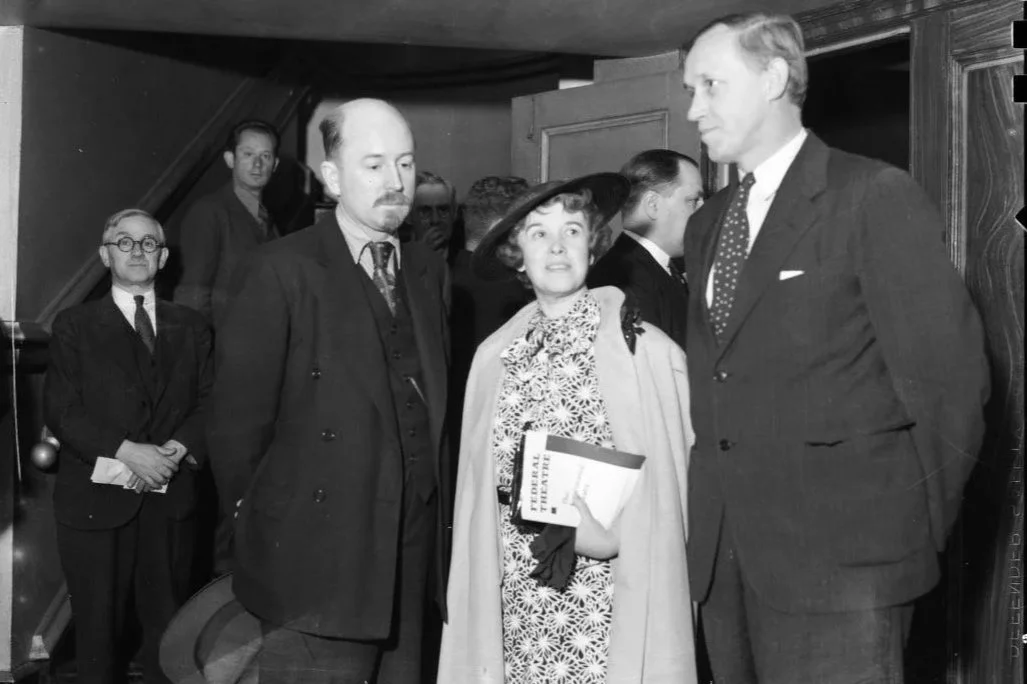
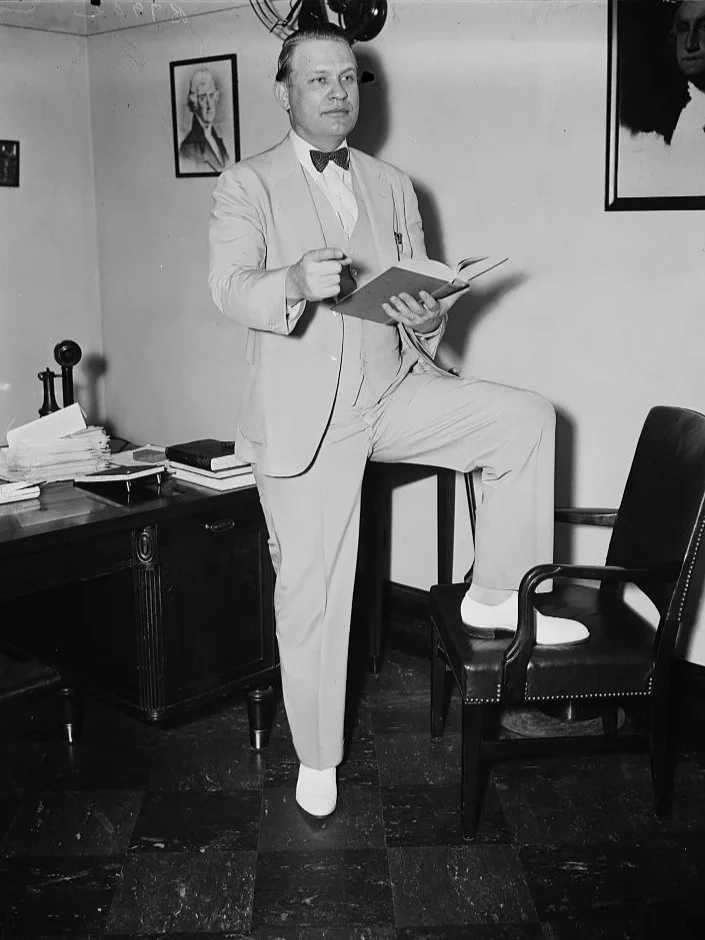
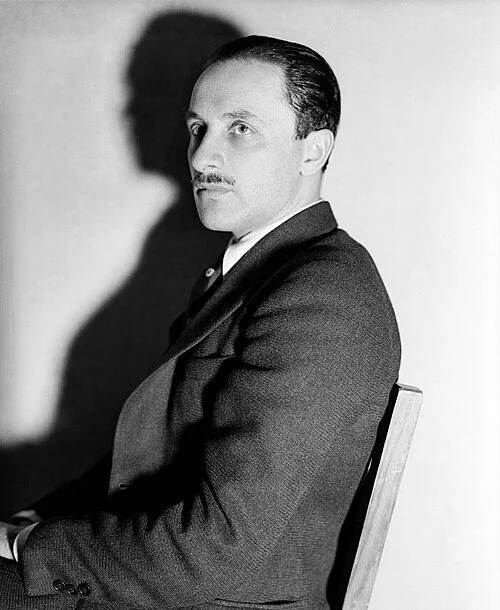
Photo Source: The Library of Congress Federal Theatre Project Collection unless noted otherwise. Browse the Federal Theatre Project collection online.
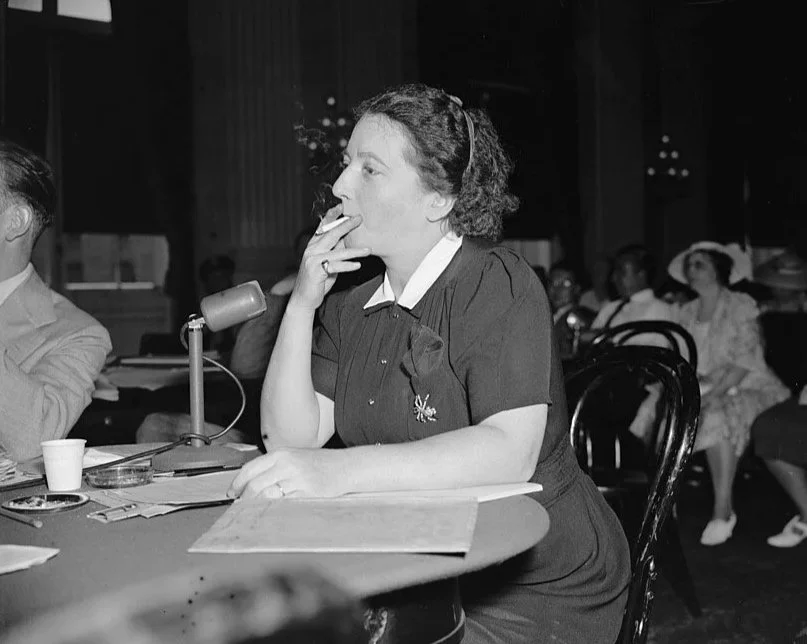
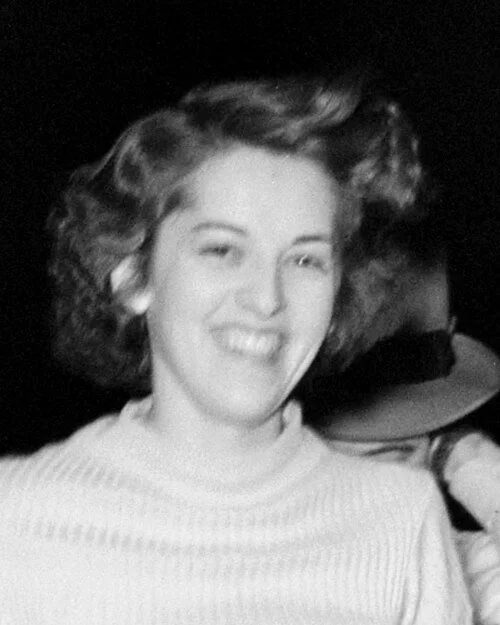
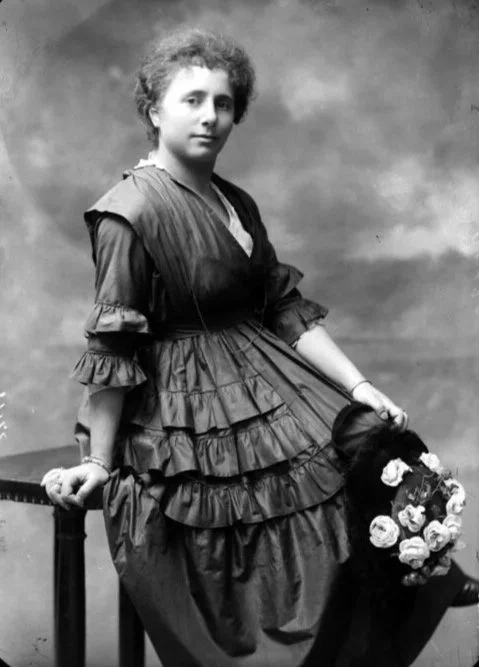
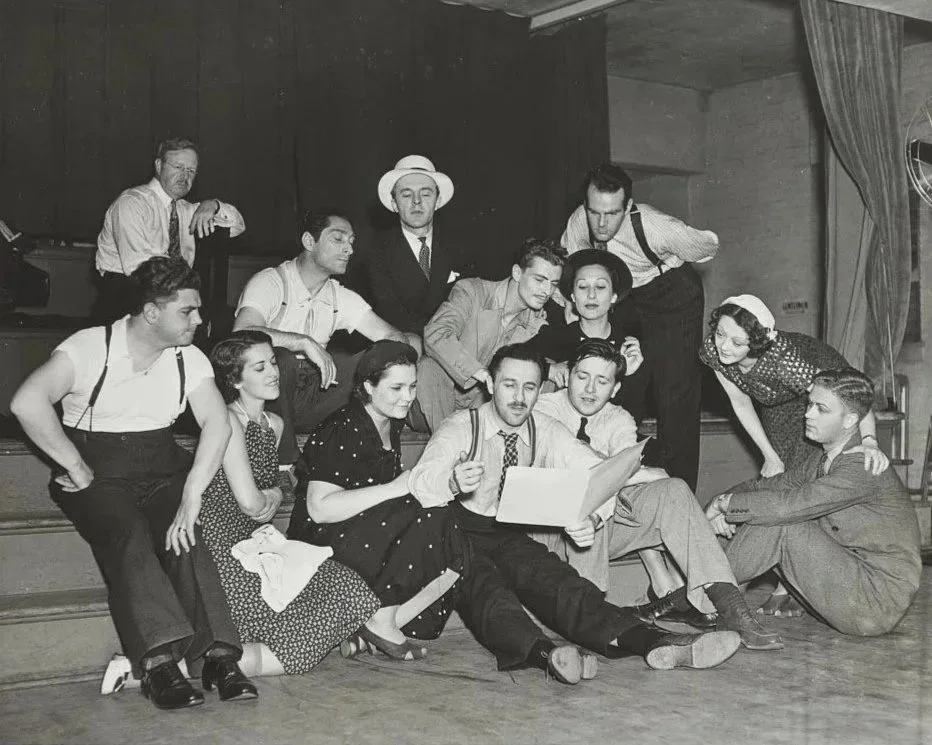
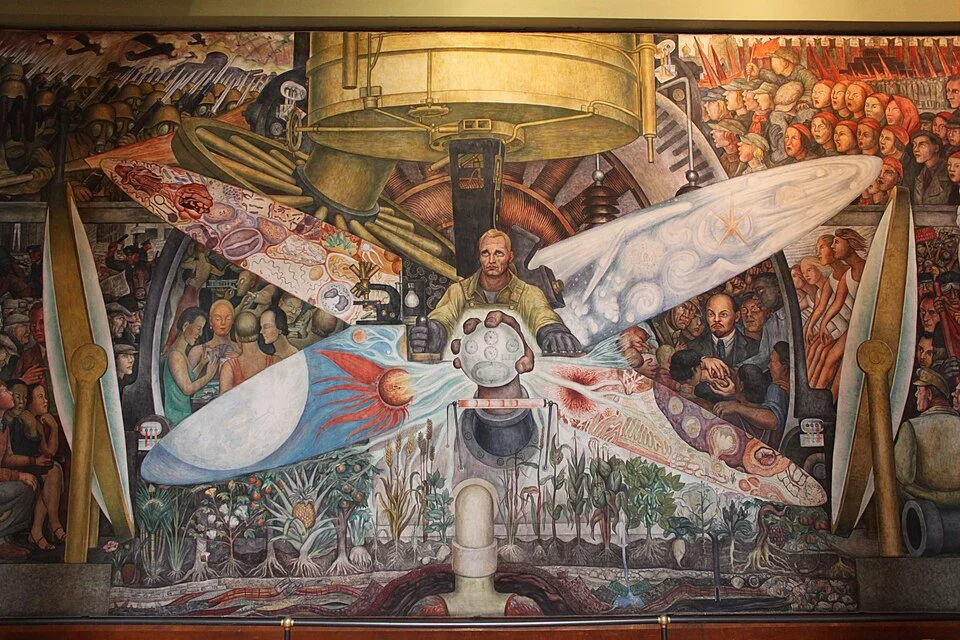
Born in Mexico, Diego Rivera (Ruben Blades), captured international fame as an artist. He and his wife, artist Frida Kahlo (Corina Katt Ayala), spent the 1930s in the United States. Some of Rivera’s murals can be seen today in Detroit and San Francisco. “Man at the Crossroads” can be seen at the Palace of Fine Arts in Mexico City (“El hombre controlador del universo”). The original was commissioned by Nelson Rockefeller (John Cusack) for Rockefeller Center in New York City in 1933. Nelson Rockefeller was the grandson of John D. Rockefeller, co-founder of Standard Oil. The image of Vladimir Lenin of the USSR in Rivera’s mural led to an historic dispute over censorship and artistic freedom. Nelson Rockefeller would later carve a career in politics with the Republican Party, and served as the 49th Governor of New York, and 41st Vice President of the U.S. (President, Gerald Ford).
NOTE: Diego Rivera was not part of the WPA project or the Federal Theatre Project. However, the story of the “Man at the Crossroads” dispute is depicted in CRADLE WILL ROCK.
Photo source: Wikimedia Commons
THE SCOTTISH PLAY SET IN THE CARIBBEAN. PERFORMED IN HARLEM.
The story of The Federal Theatre Project’s production of William Shakespeare’s Macbeth is not included in CRADLE WILL ROCK, but its behind-the-scenes story is the stuff that inspires great historical drama.
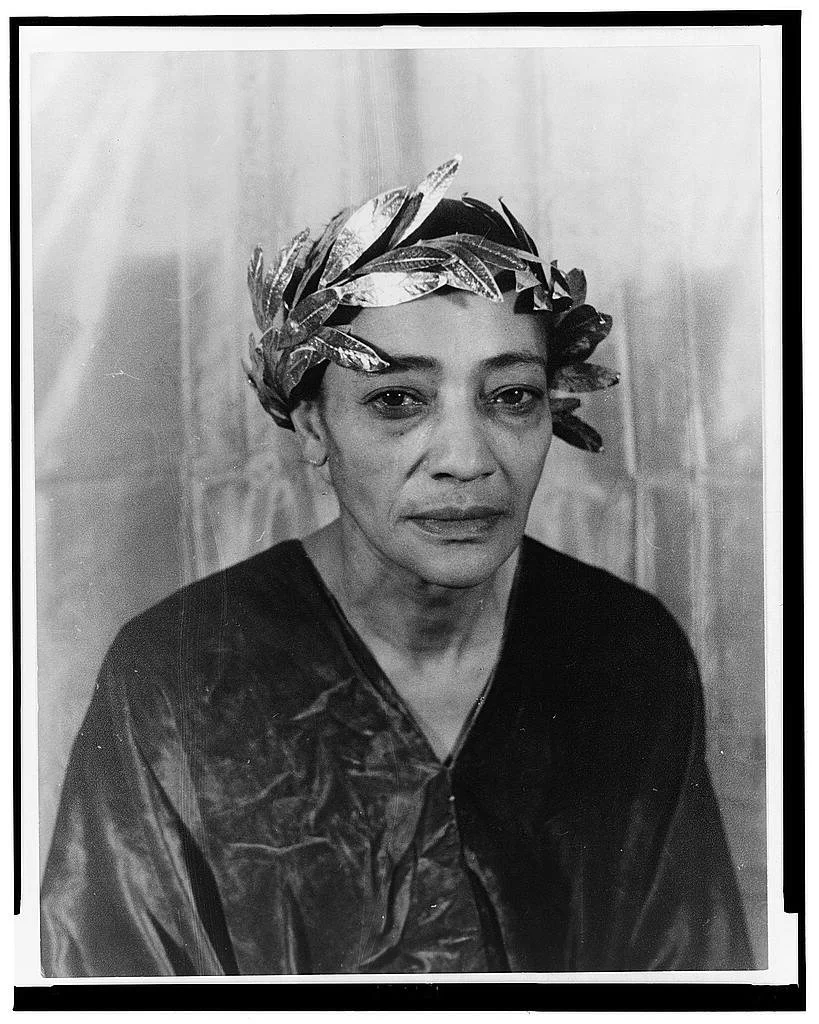
Rose McClendon (1884 - 1936)
The Federal Theatre Project’s production of William Shakespeare’s Macbeth set in 19th century Haiti with an all-Black cast needed an anchor in Harlem. Rose McClendon “was deeply involved in Black community theater,” as a playwright, director and actress writes James Shapiro in The Playbook. She founded the Negro People’s Theatre and performed in Broadway shows. McClendon’s Negro People’s Theatre was morphed into Hallie Flanagan’s Federal Theatre’s Harlem Unit with “the addition of a few White administrators.” McClendon was cast as Lady Macbeth for the Harlem production. Sadly McClendon became seriously ill and died at age 51. John Houseman took over the Harlem Unit and brought in 20-year-old Orson Welles to direct Macbeth. The FTP’s Macbeth premiered at the Lafayette in Harlem in 1936. This production of Macbeth would be one of the FTP’s most successful runs and touring productions. James Shapiro includes a must-read chapter about the production in The Playbook.
Photo: Rose McClendon as Medea (1935). Photo by Carl Van Vechten, Library of Congress